
Why hiring more people made your business harder to run
You built something brilliant, you hired great people and the business is growing. So why does so much of your week still look like work you never actually signed up for?
You are proud of what you have built. The product is good, the brand is considered and the customers who get it really get it. Hiring more people was the natural next step - more capacity, more capability, more of the good stuff happening without everything running through you.
What nobody mentioned is that more people also means more conversations about how things are done, more time spent explaining the standard, more of your week on the kind of work that does not particularly energise you - because the business has grown. And growing businesses need something that early-stage ones do not.
When it was just a handful of you
When you were four or five people, none of this was an issue. Everyone was close enough to overhear the same phone calls, sit in on the same conversations, absorb the vision just by being in the room. Information travelled by proximity. Nobody needed a briefing document because they were already inside the thinking.
The moment you go from five to eight people, that changes. The newer members of the team were not there for the early days. They did not hear how you talked about the brand when you were building it, they did not absorb the standard by osmosis and they are too far removed from the original energy to pick it up naturally. Suddenly the chain of communication that used to run itself needs to be consciously built and in most founder-led businesses, it never quite is.
So each new person needs to understand how things are done, what the standard is, what matters and what does not. And because that understanding still lives inside your head, you are the one who has to transfer it. Every time. Which means a growing slice of your week goes to exactly the kind of work you were hoping the team would free you from.
Growth exposes the gaps
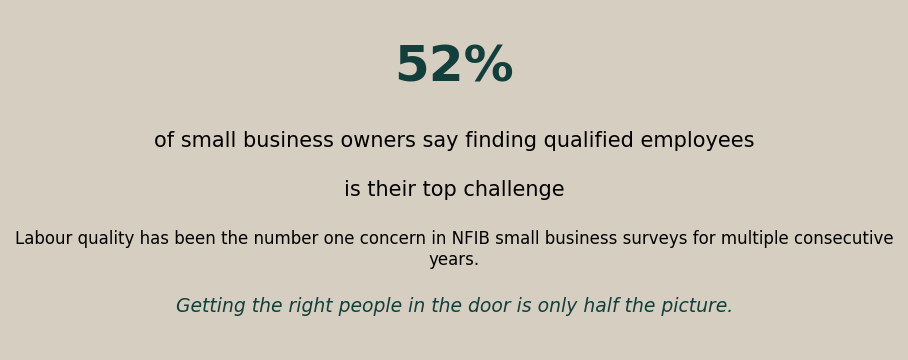
There is a pattern that shows up in almost every founder-led brand at the 8-20 person stage. When the team was smaller, quality was easy to maintain because you were close to everything. You could course-correct quietly. You could spot when something was slightly off and fix it before the customer noticed.
As the team grows, that natural proximity disappears. The standard you care so deeply about has never been formally transferred, so the team works to their own interpretation of it. Not because they do not care, but because they are genuinely doing their best with what they have been given. And what they have been given is not enough.
Growth exposes every weakness. Whatever is slightly broken at small scale becomes significantly broken at large scale.
The natural response is to stay closer to the work. To check in more, to give more direction, to be more across the detail. Which is find, except that the detail is not where your best contribution lies. Your best contribution is the vision, the taste, the creative direction that made what the brand is. And that part is the part that keeps getting squeezed.
The structure has not caught up with the size
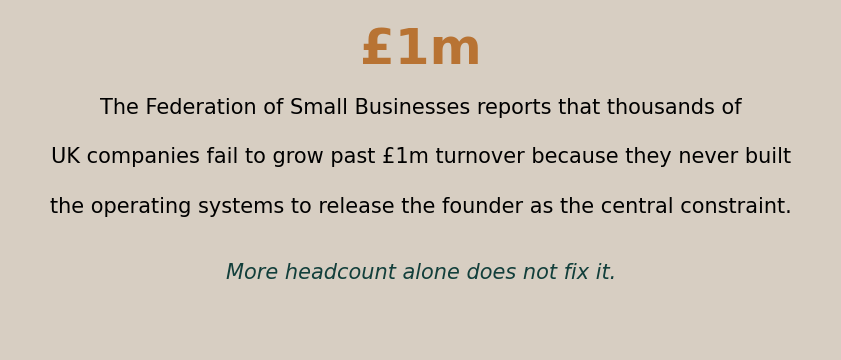
Most founders never hire with a structure in mind. They hire for the skill that is missing right now. Someone to handle the orders. Someone to manage the socials. Someone to help in the studio. Each hire makes sense in the moment and every single one of them ends up reporting directly to the founder because that is the only structure that exists. When you are five people, that works fine. When you are twelve, it means you have twelve different conversations to have, twelve sets of updates to give, twelve people waiting on you before they can move forward. At some point, some roles simply cannot report directly to the founder anymore. And quite frankly, they should not need to.
The founder's job at scale is to set the standard, not to personally execute it every single time.
Adam J. Graham
Your vision, your standards, your instinct for what the brand is and what it absolutely is not - none of that has been made transferable yet. It exists in you. And until it is pulled out of your head and built into how the team actually operates, the team will keep needing you for things that should not need you at all.
What actually shifts things
The founders who get more of their week back do not do it by hiring a tenth person or an eleventh. They do it by finding or developing the person who can sit between them and the team - someone who understands the vision deeply enough to hold the standard, make the day-to-day calls and keep things moving without the founder needing to be across all of it.
When that person is in place, the founder gets back to the part they are brilliant at. The team gets the leadership and direction it needs. And the brand that was built on one person's taste and energy starts to travel further than that one person can personally reach.
You built something genuinely worth protecting. The goal now is making sure the team delivers it the way you would, so you can spend more of your time on the work only you can do.
If any of this hit home
If any of this sounds familiar, the best place to start is the free guide below. Five practical ways to get your vision out of your head and into your team, so the brand you have worked so hard to build starts travelling further than you can personally reach.
Download the FREE GUIDE to get your team to think, sound and decide like you here.