Shifting Your Mindset: Embracing your role as a visionary founder
You didn't start this business to be its Managing Director or did you?
Probably not. You started it because you had an idea that wouldn't leave you alone: A product, a gap, a better way of doing something. You could see it clearly - how it would look, how it would feel, what kind of person would love it - and then you went and made it real.
That part? Totally your thing. You were built for it.
And then the business grew. You hired people and somehow, without anyone planning it that way, you ended up as the person everyone reports to, the person who approves everything, the person who is all professional and has all the answers. Nobody told you that was going to happen.
And even more important: Nobody told you that you didn't have to accept it.
There's nothing wrong with not wanting to manage
This is the bit that traditional business advice skips straight past: The general assumption seems to be that as a founder, managing is simply part of the job and if you find it difficult or draining, you just need to get better at it.
I call BS! You don't. In fact, you need to stop doing it.
Being a visionary - someone who thinks in possibilities, who sees what the brand could be, who gets genuinely excited by a new product direction or bold creative decision - is a special kind of talent and intelligence. It is not a lesser version of being a structured operator. It is a different skill entirely and it's the skill that built your business in the first place.
The idea that you should now spend most of your time away from that and instead spend it with people management, process, repetitive conversations and operational detail is not a natural progression. It is a mismatch. And the sooner you name it as that, the sooner we can do something about it.
What gets in the way
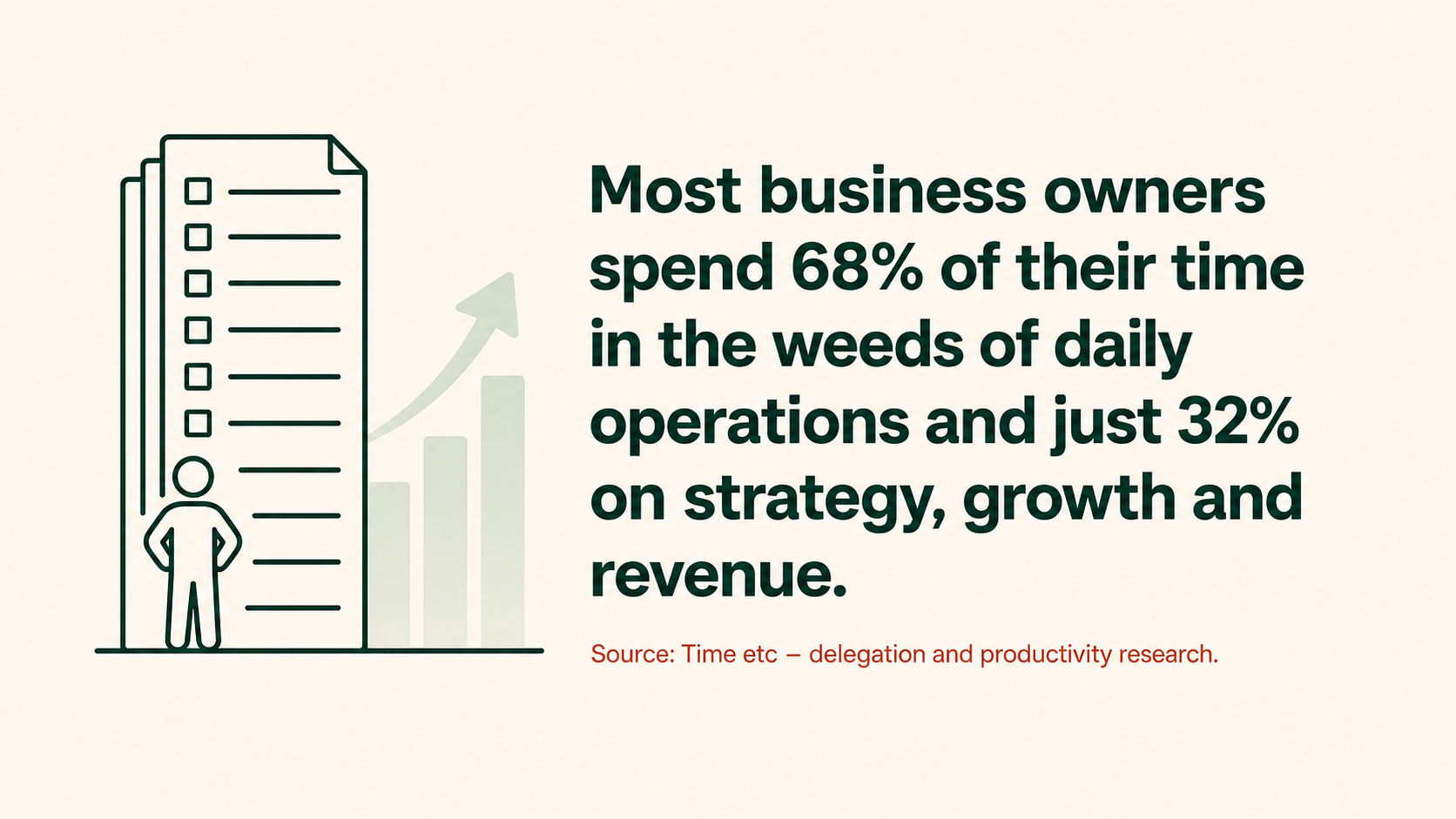
Most founders at the 8 to 20 person stage know something has shifted, but they are not always sure what to do about it. A few patterns come up repeatedly:
Believing that doing more is the same as leading well. The more you have on your plate, the more it can feel like you are driving the business forward. You are visible, you are involved, you are across everything. But being across everything and leading well are two different things. Leadership at this stage is less about what you personally produce and more about what your team can produce without you.
Thinking no one else will do it the right way. This one is partly true and partly not. Your standards are yours and they matter. But there are people you can learn to uphold them, if you give them the right tools and enough context to understand what good really looks like.
Staying in "delivery mode" because it feels safer. When you're doing, you can see the results directly. Strategic thinking and vision would are less immediate and the payoff is less visible day to day. That can make it tempting to stay where the output is obvious.
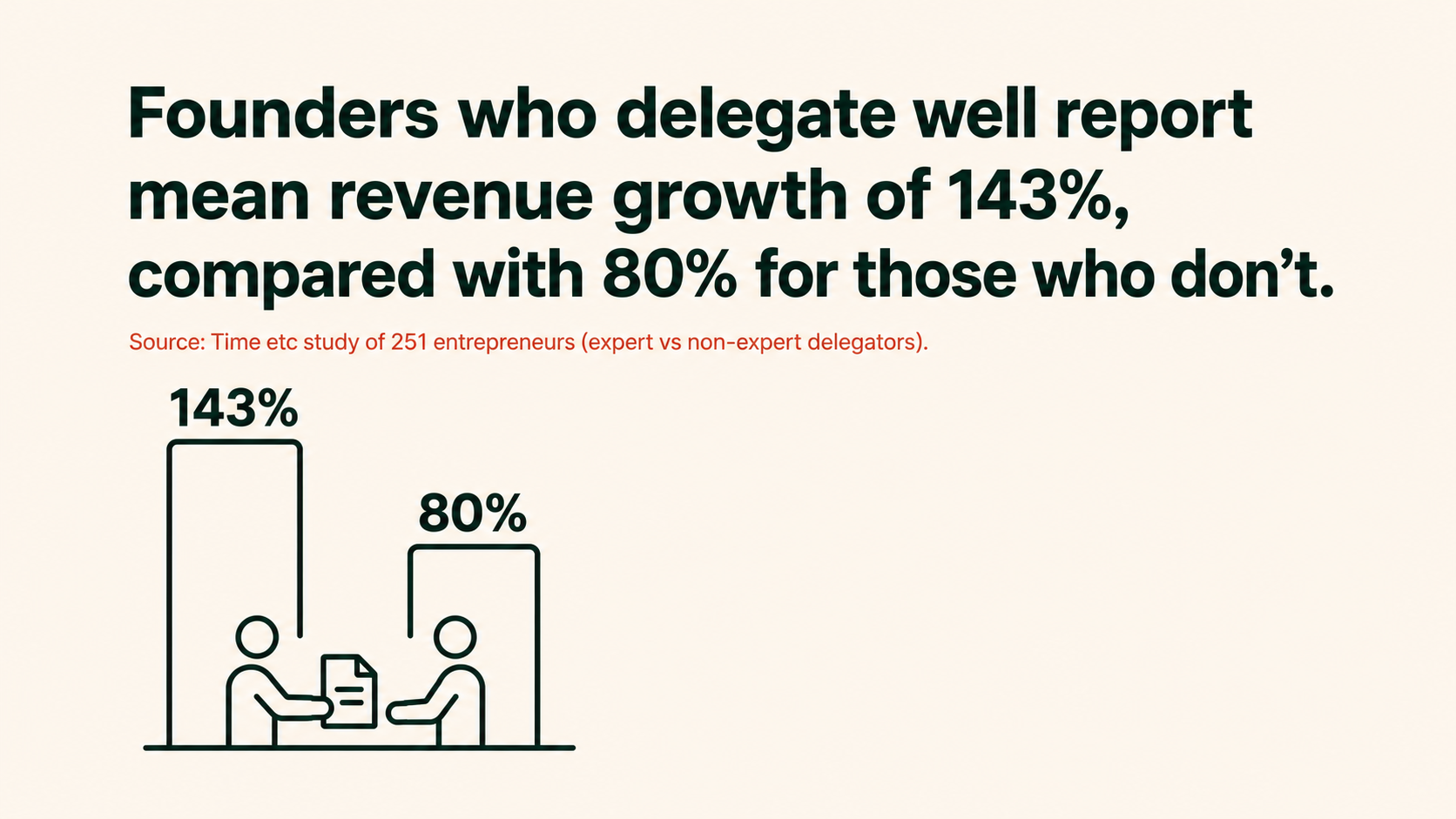
Avoiding delegation because it slows things down at the beginning. When your brain moves as fast as yours does, stopping to explain something properly can feel like pulling the handbrake on a motorway. Why hand something over when you could just do it in ten minutes? The answer is that doing it yourself in ten minutes today means doing it yourself in ten minutes every day for the next three years. The upfront investment of slowing down to delegate properly is the thing that buys you speed later.
The Crucial Shift
The mindset shift here is not from small thinking to big thinking. You were already thinking big. It is the shift from carrying everything yourself to understanding that the right people, with the right structure around them, can share the load without the vision getting lost in translation. In the end, you are still responsible for all of it. You just do not have to be the one doing all of it.
That means moving from doing to directing. Your job is to be clear about where the brand is going and what good looks like and then to equip the people around you to get there without running everything past you first.
It means moving from control to clarity: Control requires your presence. Clarity travels without you. When your team genuinely understands your standards, your values and your vision, they make better decisions on your behalf because they know what you would want.
And it means moving from being indispensable to being influential. The goal is a business where your fingerprint is everywhere, even on the days you are not in the room.
The Things That are Uniquely Yours
The exciting bit. The bit you started this business for: a new product direction that keeps you up at night because you cannot stop thinking about it. A creative decision that feels risky and brilliant at the same time. A brand evolution that only you could see coming. The idea that arrives in the shower and turns into something real six months later. That is your zone. That is where your energy is at its best and where the business genuinely needs you most.
And that kind of thinking does not happen in back-to-back meetings. It does not happen when your diary is full of performance reviews, approval requests and conversations that should have been handled two levels below you. It gets squeezed out gradually, so gradually you barely notice until one day you realise you cannot remember the last time you had a proper idea or even genuinely enjoyed your business.
The operational detail, the daily decisions, the people management - none of that has to live on your plate. And that is exactly what the right team structure is designed to carry.
Three Ways to Start Today
Define what only you should own. Write it down. Be specific. Everything outside that list is a candidate for handing over.
Protect time for strategic thinking ("working ON the business"). If it is not in the diary, it does not happen. A few hours a week of uninterrupted thinking time is not a luxury. It is the work. Protect it like an important client meeting.
When you delegate, delegate with context. Handing something over and hoping for the best is a setup for disappointment on both sides. Context means telling someone not just what to do but what good looks like, what your standard is and why it matters to the business. When people understand the reasoning behind your expectations, they can make judgement calls without coming back to you every five minutes.
You are not stepping back. You are stepping in the right role.
This is the version of your working life you had in mind when you started. Not the inbox, not the performance reviews, not the conversation you have had four times already this month. The work that lights you up. The creative thinking, the big decisions, the vision that only you can see clearly and only you can bring to life.
That is the role you were always meant to play. And the business you have built deserves a founder who is fully in it, energised by it, doing the work that actually moves it forward.
The version of your business you are building towards is one where the brand you care about travels through the team to the customer, reliably, even when you are not watching every step of it. Not because you have handed over the reins, but because you have built something strong enough to carry your vision without needing you to be everywhere at once.
That does not require you to become someone you are not. It requires the right people around you, with the right structure underneath them and you back where you belong.
If you want a starting point, download Unlock Your Team's Potential: Five Essential Steps to Transform Your Vision into Your Team's Mission. It will give you something practical to work with straight away.
Get your FREE GUIDE to Transform Your Mission into Your Team's Vision here.