
Building a Dream Team: How to Empower Your Staff to Carry Your Vision
You started your business because you had a vision - a clear sense of what you wanted to make, who you wanted to make it for and the standard it needed to meet. That vision is still there. The problem is that it lives mostly in your head and the bigger your team gets, the harder it becomes to transfer it.
This is one of the most common and least talked-about challenges facing independent product brand founders at the 8 - 20 person stage. The brand is strong. The product is good, but somewhere between you and the customer, something gets lost. The team is busy, well-meaning and working hard, but they are not quite delivering it the way you would.
The good news is that this is a structural problem, not a people problem. And structural problems have structural solutions.
Here is a framework for making sure your vision travels - through your team, to your customer, consistently.
Why Vision Gets Stuck at The Top
Before we get to the solution, it helps to name what's actually happening.
Most founders communicate their vision through proximity. They are in the room. They can course-correct in real time. They answer the question, approve the email, set the tone. And it works... at least, until the teal grows large enough that they cannot be everywhere at once.
At that point, four things tend to happen:
the vision stays undefined because it has never needed to be written down
Standards become inconsistent because different people interpret them differently
Team members wait to be told what to do because they are not sure what good looks like and
the founder ends up involved in conversations that should have been handled without them.
None of this is anyone's fault. It is simply what happens when a business grows faster than its communication structures.
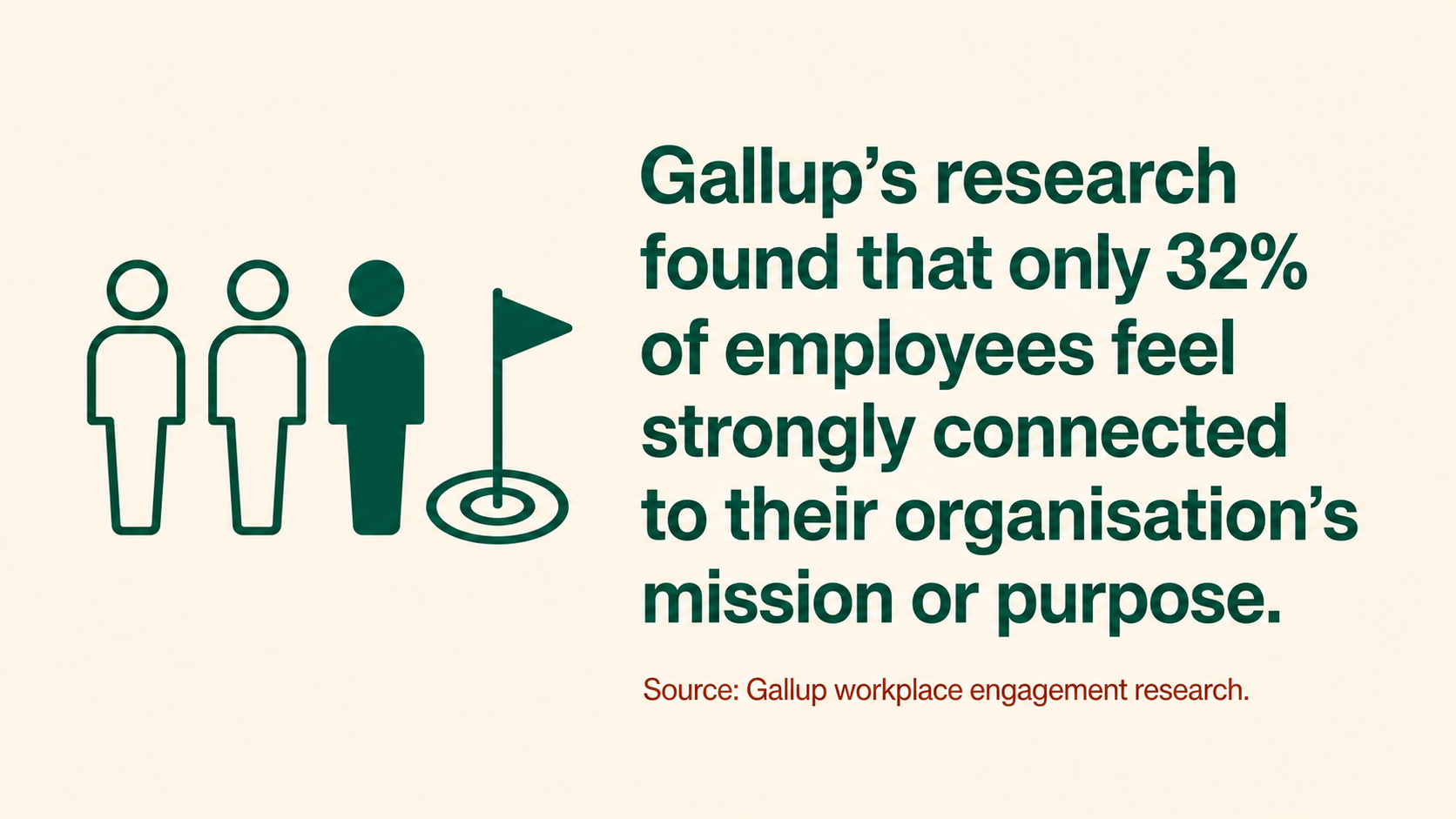
A Framework for Vision-led Teams
1. Clarify the vision - in words your team can use
A vision that lives in your head cannot guide anyone else's behaviour. The first step is getting it out and into language your team can actually work with.
This does not need to be a lengthy document. It needs to answer three questions:
What are we really selling and who is it for? (go beyond the actual product)
How do we want people to feel when they're interacting with us?
What would we never do - even if it was easier or cheaper?
How to start: Write down your answers to those three questions as if you were briefing an new team member on their first day. Keep it short. Use your own words, not corporate buzzwords. This becomes the reference point for everything that follows.
2. Translate vision into team standards
Vision without standards is just inspiration. Standards are what turn the vision into daily behaviour.
A standard is specific. It is not "we care about the customer experience." It is "every customer complaint gets a personal response within four hours." It is not "we take pride in our product." It is "nothing leaves this building that we would not be proud to put our name on."
When team members know the standard, they can make the small, daily calls themselves - how to handle a difficult customer, what tone to use in the newsletter, how to present the product at an event - without needing to check with you first.
How to start: Pick one area of the business where standards feel inconsistent right now. Write down what brilliant looks like in that area (or how you would do it), in one or two sentences. Share it with the team or the relevant person and ask them to apply it for a month.
3. Give people ownership, not just tasks
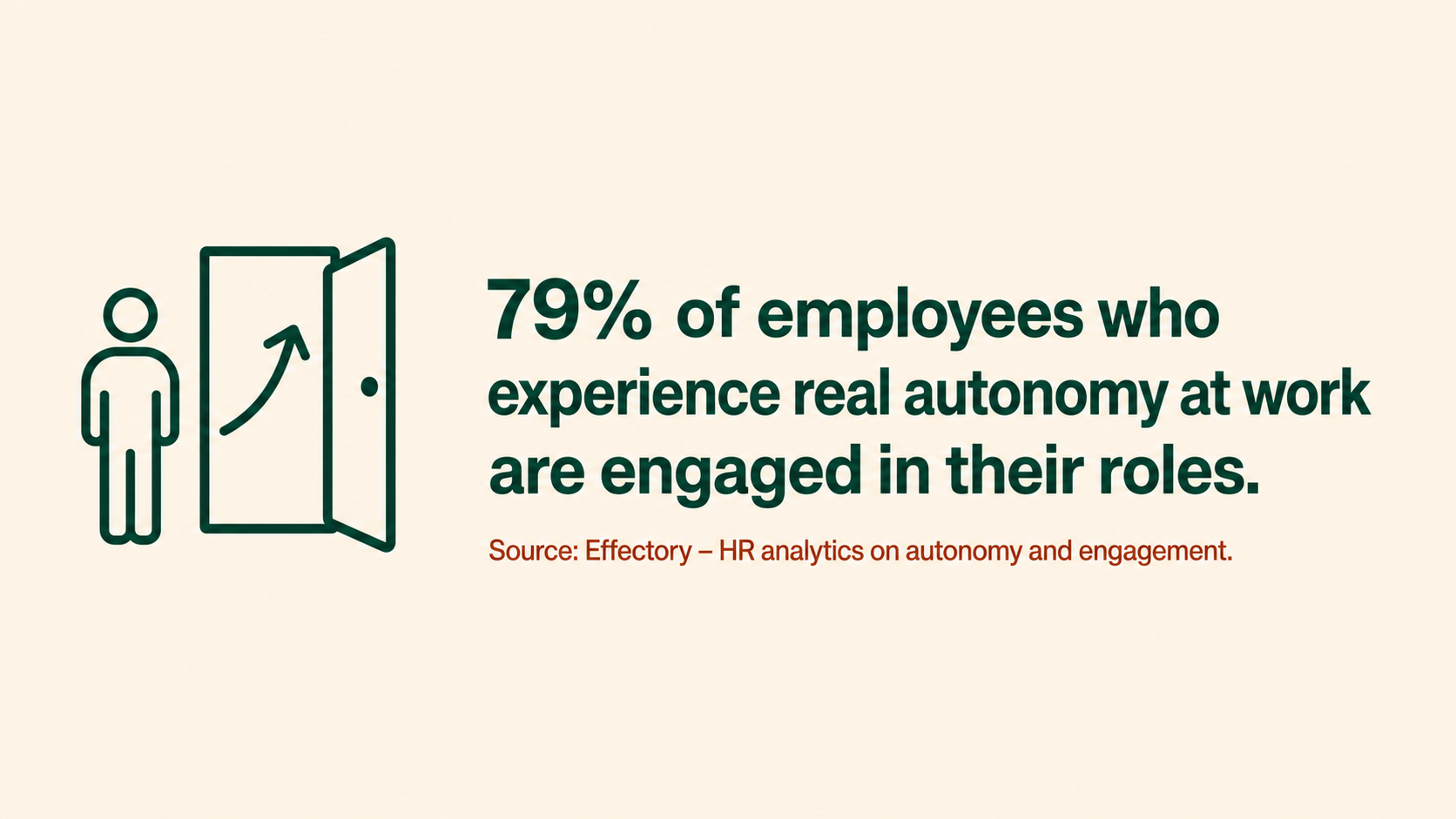
There is a difference between being given a task and owning an outcome. Tasks get completed. Outcomes get cared about. Gallup's employee engagement research - based on interviews with more than a million managers - found that a sense of ownership and individual contribution is one of the core drivers of how engaged and motivated people are at work. So this is not just a nice-to-have, but a fundamental need.
When a warehouse manager owns dispatch accuracy and not just the dispatch process, they think differently about their role. When a customer service lead owns the customer experience, not just the ticket queue, they make better calls. Ownership creates the conditions for people to think like the brand and not just work for it.
How to start: Choose one role in your team. Reframe their responsibility from a list of tasks to an outcome they can own. Tell them what the outcome is, what brilliant looks like and that you trust them to get there. Then - and this is important - agree a simple check-in rhythm so you can see how things are going. Ownership without any visibility is abdication, not delegation. The next step is all about building exactly that rhythm.
4. Create regular communication rhythms
Vision doesn't stay alive on its own. It needs regular, brief moments where it is referred to, reinforced and made relevant to what the team is working on right now.
In practice, this means two things.
First, a short weekly team meeting. Not a lengthy catch-up, not a free-for-all, but a focused meeting with a clear agenda that ends on time. One standing question worth building in: If a customer had seen everything we did this week, what would they think about us? That single question shifts the conversation from workload to brand and it does it in a way anyone in the room can engage with.
Second, a monthly or bi-monthly 1:1 with each team member or team lead. Not a performance review, but a conversation. Ask them how they would describe their role and what the brand stands for. The gap between their answer and yours is where the real work sits.
How to start: Book a recurring thirty-minute team meeting for next week. Write a simple agenda: what went well, what didn't go well, what are we doing differently and what would a customer think of us if they saw our work right now. Then pick one person for a short 1:1 this month and ask them to describe the brand in their own words. Listen carefully to the answer.
5. Recognise vision-led behaviour
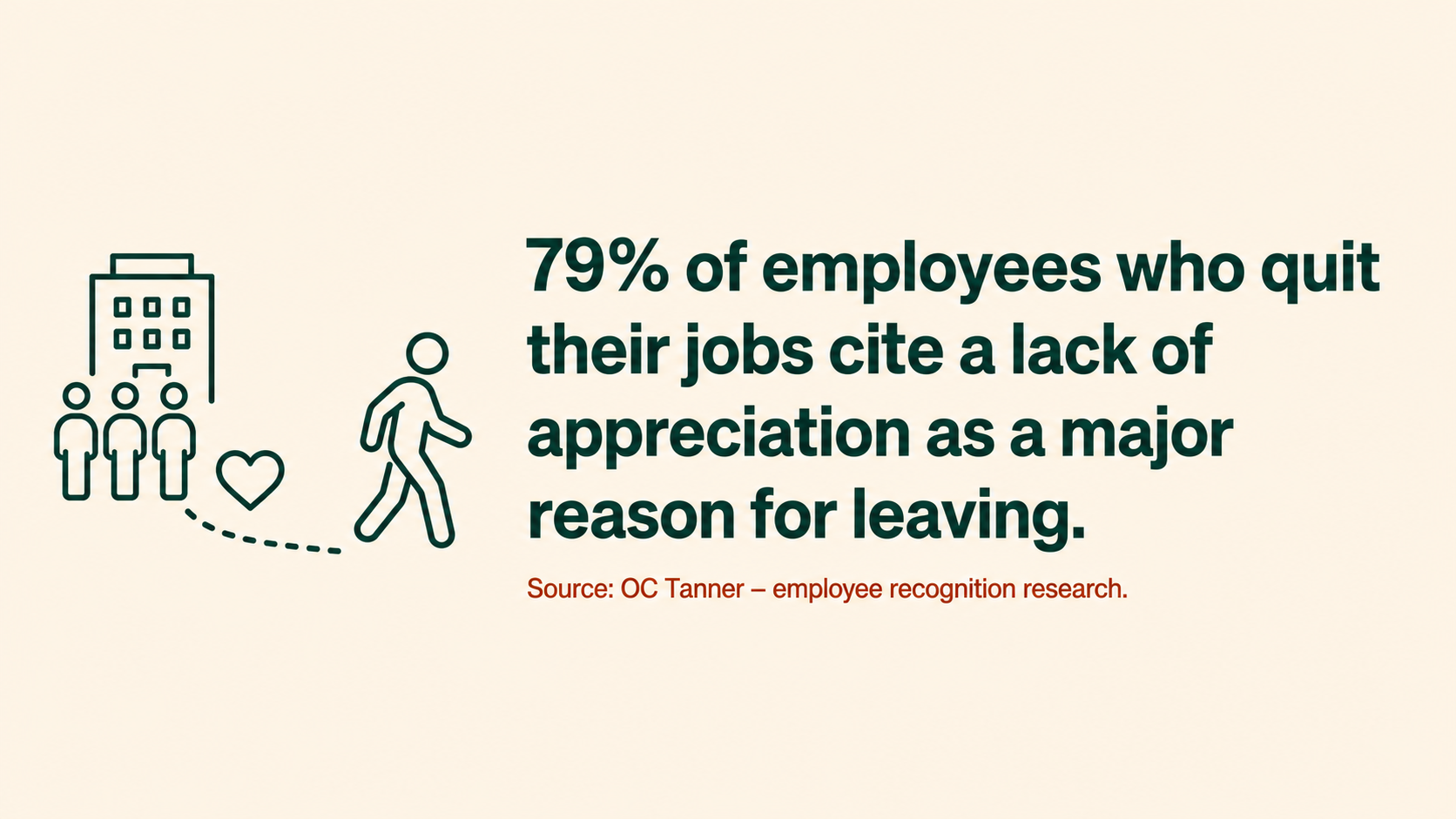
People repeat what gets noticed. If the only feedback your team receives is when something goes wrong, they will focus on avoiding mistakes. If you also name and celebrate the moments when someone got it exactly right - handled a customer the way you would have, made a call that reflected the brand - they will do more of it.
This does not need to be formal. A direct "that is exactly what we are about" in the moment goes a long way.
How to start: This week, find one example of a team member doing something that reflects your vision. Name it specifically. Watch what happens.
Bringing it together
Your team want to get it right. Most of them genuinely care about the brand they are part of. What they often lack is not motivation, but clarity. Clarity about what the vision actually is, what the brand stands for, what the standard looks like in practice and what they are trusted to handle on their own.
When that clarity exists, the vision stops depending on you to carry it. Your team carries it for you, with you.
The five pillars in this framework are not complicated. But they do require intention. The founder who takes the time to clarify the vision, set the standards and create the right rhythms ends up with a team that thinks like the brand and doesn't just work for it.
If you are reading this and realising some of these pieces are missing in your business, that is a good thing. It means you know exactly where to start.
To help you take the first step, I have put together a free guide: Unlock Your Team's Potential: Five Essential Steps to Transform Your Vision into Your Team's Mission. It walks you through the process in practical terms, so you can start building a team that carries your vision forward — consistently and without you having to be everywhere at once.
Get your FREE GUIDE to Transform Your Mission into Your Team's Vision here.