What makes a product brand last? Six things the best ones do differently
Some product brands never quite pick up or fade after a few good years. Others seem to get stronger with age. The difference is rarely down to luck, a bigger marketing budget or even a better product. Brand longevity is built on something quieter than all of that. It comes down to a handful of things the enduring brands get right and the fading ones never quite do.
Here is what the lasting ones have in common.
1. A Clear Value Proposition
People should understand immediately what the brand stands for and why it's worth buying. Not just a vague category claim, but a sharp specific point of view that rules out as many people as it attracts.
The brands that do this brilliantly are usually led by a founder who can articulate their purpose in a single sentence without hesitating. The problem is that sentence often lives only in their head. Once it needs to travel through the team, into product descriptions, into customer service responses, into the way someone answers the phone on a Tuesday afternoon, it loses something. The brands that last have found a way to make the point of view infectious. Every person in the business understands it - not because they were told it in a meeting, but because it is baked into how the whole operation works.
Elvis and Kresse is a brilliant example. Founded in 2005, the brand rescues decommissioned fire hoses and other discarded materials and transforms them into luxury accessories, donating fifty percent of profits to related charities. The proposition could not be clearer: rescue, transform, donate. It appears in everything they make and everything they say. Their website puts it plainly: they do not need a marketing strategy because the truth is interesting enough. After over twenty years, that point of view is just as sharp as it was on day one.
2. Excellent Product Quality
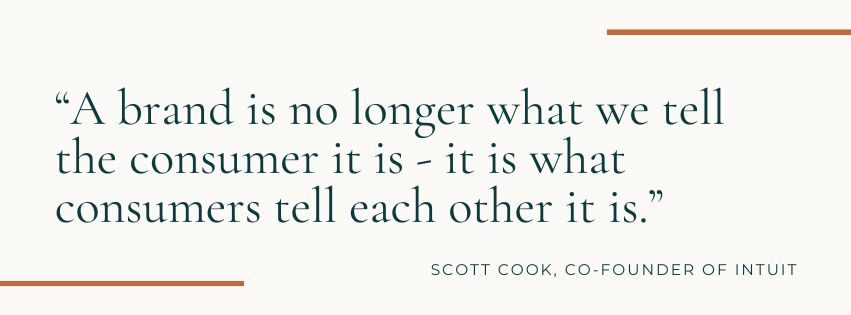
Trust is the foundation of longevity and trust is built through the product itself. Not the branding around it, not the story behind it, but the thing the customer actually receives and uses. Durability, consistency of quality and performance are what earn the repeat purchase and the word-of-mouth referral that no advertising budget can replicate.
The challenge for growing brands is that quality is often a deeply personal thing for the founder. They can feel when something is right. They know instinctively which fabric is too thin, which packaging feels cheap, which finish is not quite there. Transferring that instinct to a team is hard. It is not enough to say 'we only use the best materials.' The standard has to live somewhere that is not just inside the founder's head.
Beaumont Organic, the Manchester-founded womenswear brand, is a strong example. Founded in 2008 by Hannah Beaumont-Laurencia, the brand has built its entire identity around the same commitment from day one: timeless designs, the highest quality certified organic fabrics and full supply chain transparency on every product page. The standard has not drifted. Hannah has visited her suppliers and factories regularly throughout the life of the business, ensuring the quality bar she set at the start has been embedded in how the whole operation works, not just held by her.
3. Consistency
The best brands are cohesive across product, messaging, service and experience. A customer who discovers your brand through instagram and one who calls to place an order should encounter the same version of you. Inconsistency is invisible to the team but very visible to the customer.
This is one of the most common growing pains for independent product brands. When the business is small, the founder is the consistency. They are in every conversation, every decision, every piece of copy. As the team grows, that changes. The tone starts to drift. The packaging is perfect but the email sounds like a different company wrote it. The product is brilliant but the experience around it is patchy. What the brand sounds and feels like starts to depend on who happens to be working that day. And consistency is not just about the tone of voice: It is about every touchpoint, from the packaging to the reply to a customer complaint, carrying the same version of the brand - consistently, every time.
Hiut Denim is a striking example. Founded in 2011 by David and Clare Hieatt in Cardigan, Wales, the brand makes jeans and only jeans. Their philosophy - Do One Thing Well - has never moved a millimetre in fifteen years. The voise, the newsletter, the way they describe their craftspeople as Grand Masters, the refusal to expand into other product lines: all exactly the same as day one. That level of consistency does not happen by accident. It is the result of a founder's vision being so clearly understood internally that the whole business expresses it without the founder needing to be present for every decision.
4. Relevance Over Time
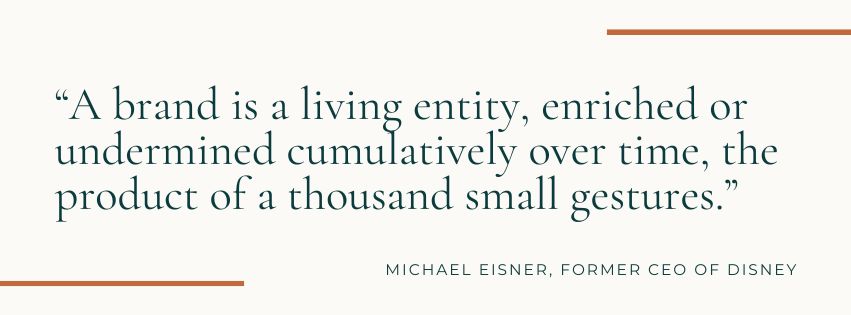
The brands that last for decades do not stay exactly the same. They evolve with culture, customer needs and market shifts without losing what made them distinctive in the first place. Holding that balance between stability and adaptation is difficult and most brands get it wrong in one direction or the other. They either change so much they become unrecognisable or they stay so rigid they become irrelevant.
The key is knowing which things must never change and which things must. Core identity does not move. The aesthetic expression of it can. Values stay fixed. The product range adapts.
Rapanui, the Isle of Wight sustainable clothing brand, is a good illustration. Founded by brothers Rob and Mart Drake-Knight, the mission has never shifted: eradicate waste from fashion by doing it properly. What has changed is how they express that mission across their product range, their technology and their supply chain, constantly raising the bar. They have even started sharing their manufacturing technology they developed with other brands and startups. The purpose is the same. The business around it keeps getting better.
5. Emotional Connection
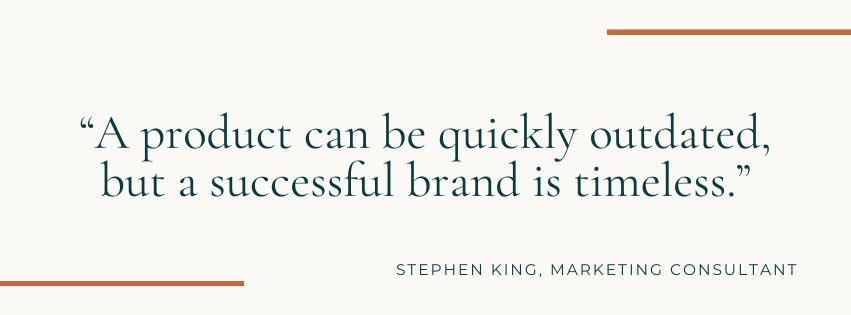
Long-lasting brands make people feel something. Not just satisfied with the product, but proud to own it, connected to what it stands for, part of something bigger than a transaction. That emotional layer is what turns a repeat buyer into an advocate and an advocate is worth a hundred paid impressions.
Emotional connection almost always starts with the founder. It comes from genuine belief, not a brand workshop. Customers can feel the difference between a brand built on a real point of view and one built on a positioning deck. The question is whether that genuine belief travels beyond the founder into the wider business experience. Because the customer does not just buy the product. They buy the packaging, the email, the response when something goes wrong, the experience at every touchpoint. If the belief only lives with the founder, the emotional connection is fragile.
UpCircle Beauty is a compelling example. Co-founded by siblings Anna and Will Brightman in London, the brand rescues ingredients that would otherwise go to landfill, starting with used coffee grounds from artisan coffee shops and transforms them into certified skincare. The emotional pull is not just that the products work, it is that every purchase does something useful with waste that would otherwise be thrown away. Customers write about feeling proud to use the products and about the brand listening to them. That feeling has not been generated by a campaign. It is the natural result of a genuine founding conviction being expressed through every product, every transaction and every story the brand tells.
6. A Sense of Community
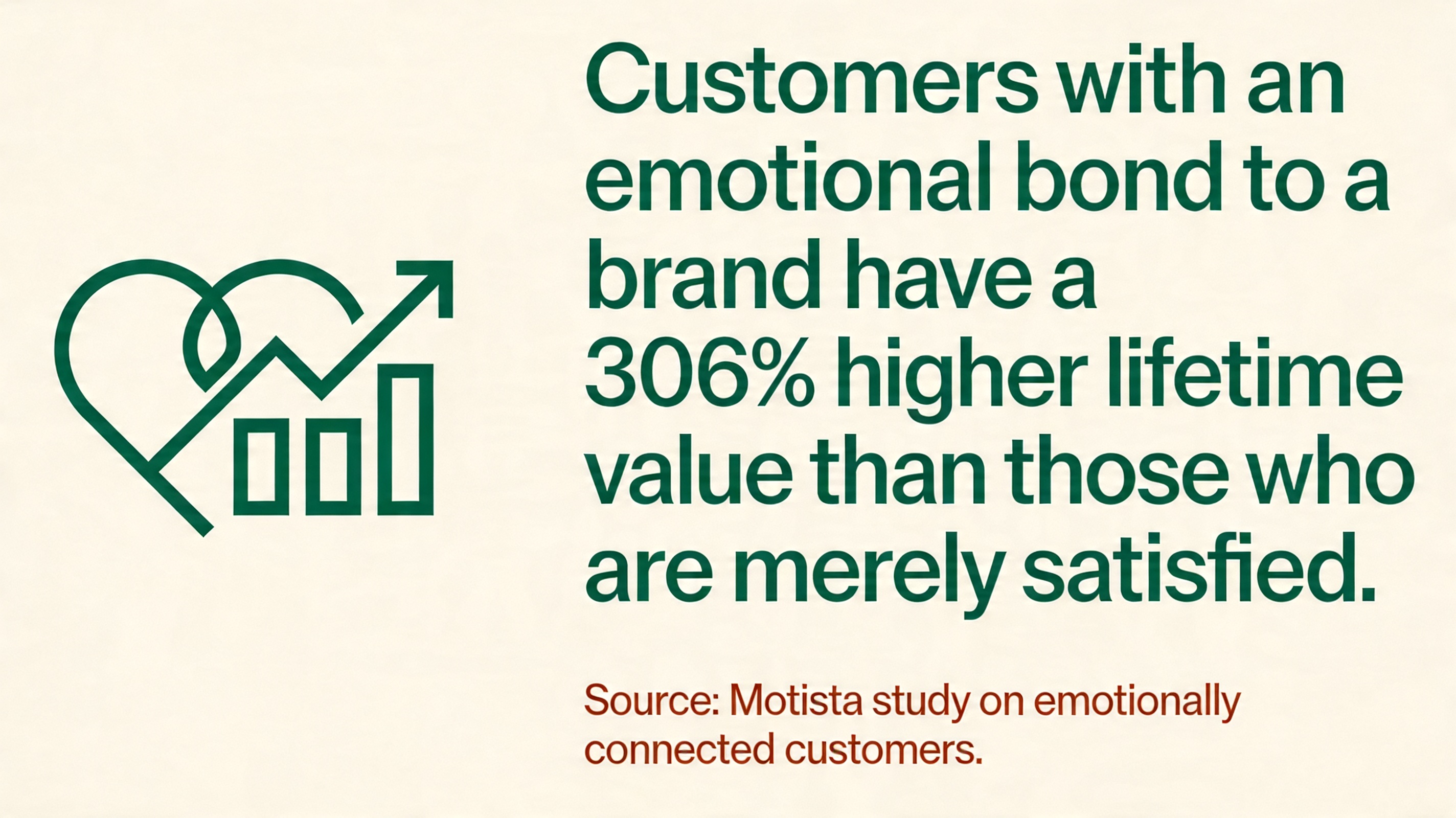
The brands that truly last do not just have customers. They have people who feel they belong to something. A community that forms around shared values, shared aesthetic, shared identity. Once that exists, the brand has something no marketing budget can buy: people who will defend it, promote it and keep coming back not just for the product but for the feeling of being part of it.
Building community is not a strategy that can be bolted on later. It grows from the same root as everything else: a founder who genuinely believes in what they are making and a business that expresses that belief at every touchpoint. When the brand's soul stops with the founder and does not reach the teaam , the community feels it before anyone says anything out loud.
Lucy and Yak is one of the clearest examples of community-building in the UK independent brand world. Founded in 2017 by Lucy Greenwood and Chris Renwick out of a campervan called Yak, the brand built a following of passionate customers knows as Yakkers, who talk to each other, buy and sell old pieces within private facebook groups and attend in-store events. The community was not manufactured. It grew becasue the brand's values - joy, inclusivity, sustainability - were lived rather than stated and customers felt that at every point of contact. As Lucy described it: The community helped build the brand into what it is today.
The One Thing That Ties It All Together
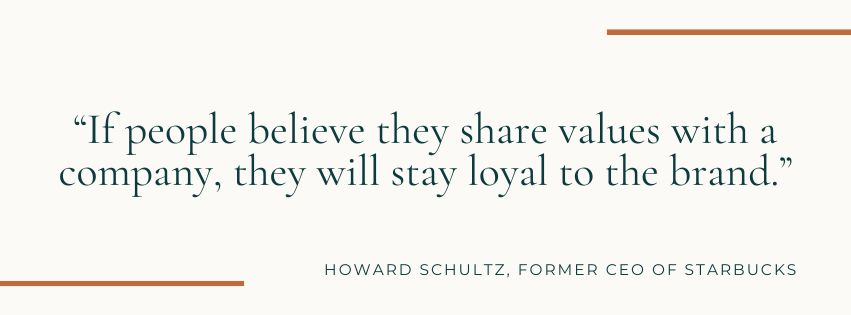
Run through all six of these brands and you will notice something. Every single one was started by a founder (or two) with a specific vision in their head. Not just a product idea, but a set of beliefs about what the brand should stand for, how it should feel and what kind of experience it should create.
The reason these brands have lasted is not that the founder has been present for every decision. It is that they found a a way to make their vision travel beyond themselves, through their products, their teams and the experience they deliver. The vision that started as something only they could see has become something the whole business expresses.
There is a useful test for this: If you removed the logo from everything your brand produces, would people still recognise it by the quality, the tone and the experience?
If yes, the brand is built on solid foundations.
If the answer is no or maybe or I'm not sure my team would always get it right, that's worth paying attention to.
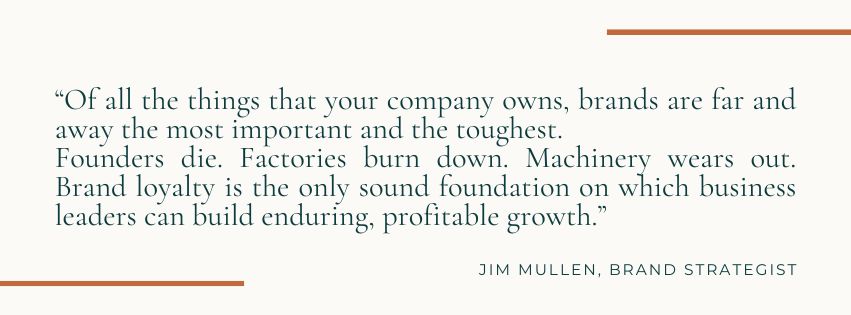
Building a lasting brand is not the default outcome, but a deliberate one. The brands that last are the ones where the founder's vision is not a secret. It lives in the product, the process and the people. And that does not happen by chance.
Get Your Team to Think, Sound and Decide Like You
If you often wished you weren't the only one who 'gets' your brand or if you sometimes overhear your team speaking to customers and immediately can think of five things they should have said differently, know you're not alone. I have put together a guide to show you the five ways to get your vision out of your head and into your team to help.
Get your FREE GUIDE to get your team to think, sound and decide like you here.